1 / 2
Lake Inle Danio (Inlecypris auropurpurea)
Lake Inle Danio (scientific name: Inlecypris auropurpurea, sometimes listed as Devario auropurpureus) is a striking freshwater fish species endemic to Lake Inle in Myanmar.
Quick Facts
- Family: Danionidae
- Origin: Lake Inle, Myanmar
- Conservation Status: Endangered (IUCN)
- Size: Typically 6–8 cm, occasionally up to 10 cm
- Schooling: Yes, best kept in groups of 8–10 individuals
- Temperament: Peaceful, active, but can be skittish; avoid aggressive or very slow tank mates
Appearance
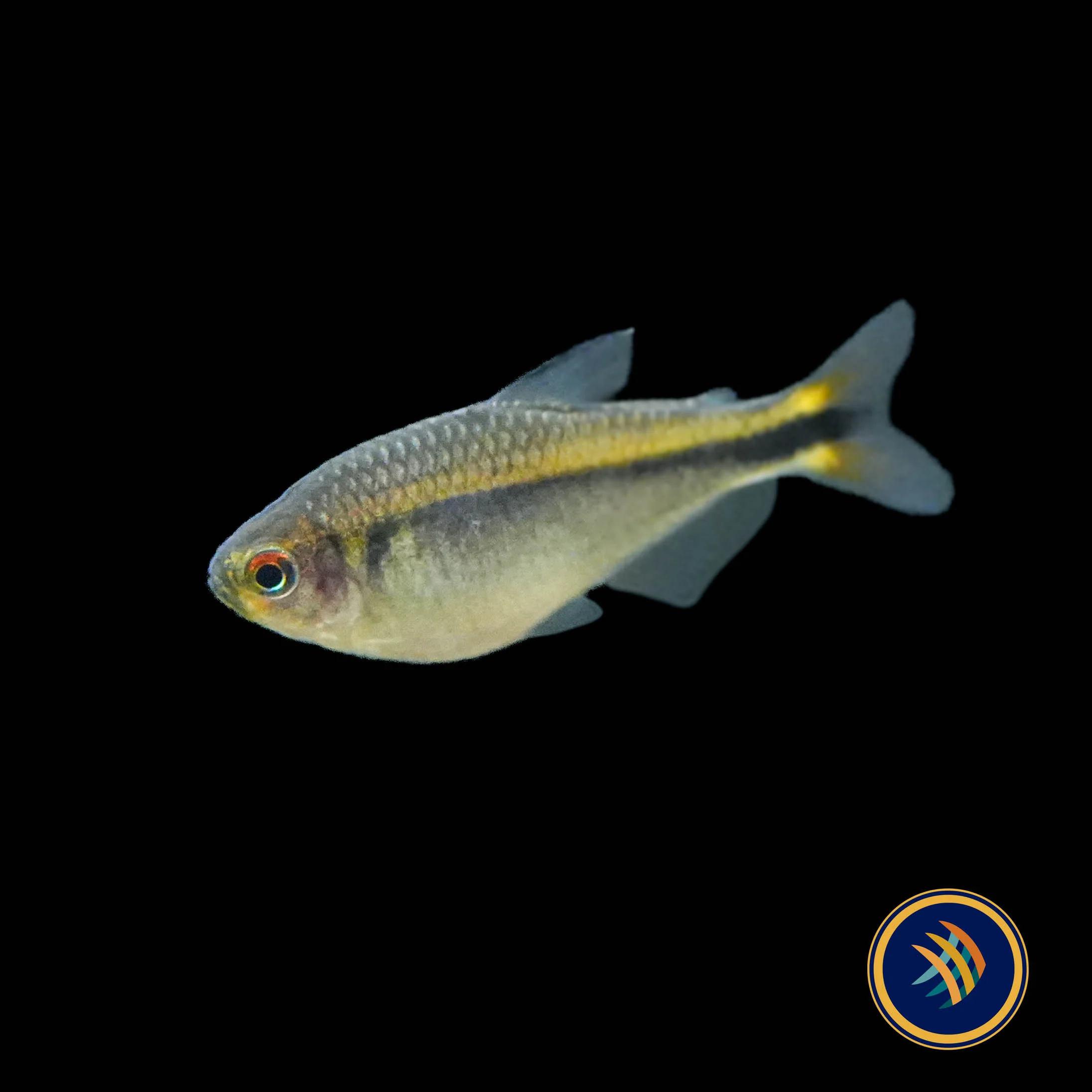
- Body Shape: Streamlined, torpedo-like
- Coloration: Silvery base with 20–30 black vertical stripes over a golden-yellow lateral band; some individuals show purple-blue hues
- Sexual Dimorphism: Females are rounder and less colorful than males
Natural Habitat
- Found in submerged vegetation zones of Lake Inle
- Water parameters in the lake:
- pH: 7.1–8.8
- Temperature: 21–29 °C (daytime)
- Hard water, slightly alkaline
Aquarium Care
- Tank Size: Spacious, with open swimming areas and dense planting along edges
-
Water Parameters:
- Temp: 20–23 °C
- pH: 6.0–8.0
- GH: 10–25
-
Setup Tips:
- Moderate flow, well-oxygenated water
- Floating plants help reduce skittishness
- Tight-fitting lid (they jump!)
Diet
- Wild: Insects and aquatic invertebrates
- Captivity: High-quality flakes, live/frozen foods like mosquito larvae, Drosophila, etc.
Breeding
- Method: Egg scatterer, no parental care
- Spawns on or near fine plants
- Females become rounder when gravid
Lake Inle Danio (scientific name: Inlecypris auropurpurea, sometimes listed as Devario auropurpureus) is a striking freshwater fish species endemic to Lake Inle in Myanmar.
Quick Facts
- Family: Danionidae
- Origin: Lake Inle, Myanmar
- Conservation Status: Endangered (IUCN)
- Size: Typically 6–8 cm, occasionally up to 10 cm
- Schooling: Yes, best kept in groups of 8–10 individuals
- Temperament: Peaceful, active, but can be skittish; avoid aggressive or very slow tank mates
Appearance
- Body Shape: Streamlined, torpedo-like
- Coloration: Silvery base with 20–30 black vertical stripes over a golden-yellow lateral band; some individuals show purple-blue hues
- Sexual Dimorphism: Females are rounder and less colorful than males
Natural Habitat
- Found in submerged vegetation zones of Lake Inle
- Water parameters in the lake:
- pH: 7.1–8.8
- Temperature: 21–29 °C (daytime)
- Hard water, slightly alkaline
Aquarium Care
- Tank Size: Spacious, with open swimming areas and dense planting along edges
-
Water Parameters:
- Temp: 20–23 °C
- pH: 6.0–8.0
- GH: 10–25
-
Setup Tips:
- Moderate flow, well-oxygenated water
- Floating plants help reduce skittishness
- Tight-fitting lid (they jump!)
Diet
- Wild: Insects and aquatic invertebrates
- Captivity: High-quality flakes, live/frozen foods like mosquito larvae, Drosophila, etc.
Breeding
- Method: Egg scatterer, no parental care
- Spawns on or near fine plants
- Females become rounder when gravid
$10.59
Lake Inle Danio (Inlecypris auropurpurea)—
$10.59
Description
Lake Inle Danio (scientific name: Inlecypris auropurpurea, sometimes listed as Devario auropurpureus) is a striking freshwater fish species endemic to Lake Inle in Myanmar.
Quick Facts
- Family: Danionidae
- Origin: Lake Inle, Myanmar
- Conservation Status: Endangered (IUCN)
- Size: Typically 6–8 cm, occasionally up to 10 cm
- Schooling: Yes, best kept in groups of 8–10 individuals
- Temperament: Peaceful, active, but can be skittish; avoid aggressive or very slow tank mates
Appearance
- Body Shape: Streamlined, torpedo-like
- Coloration: Silvery base with 20–30 black vertical stripes over a golden-yellow lateral band; some individuals show purple-blue hues
- Sexual Dimorphism: Females are rounder and less colorful than males
Natural Habitat
- Found in submerged vegetation zones of Lake Inle
- Water parameters in the lake:
- pH: 7.1–8.8
- Temperature: 21–29 °C (daytime)
- Hard water, slightly alkaline
Aquarium Care
- Tank Size: Spacious, with open swimming areas and dense planting along edges
-
Water Parameters:
- Temp: 20–23 °C
- pH: 6.0–8.0
- GH: 10–25
-
Setup Tips:
- Moderate flow, well-oxygenated water
- Floating plants help reduce skittishness
- Tight-fitting lid (they jump!)
Diet
- Wild: Insects and aquatic invertebrates
- Captivity: High-quality flakes, live/frozen foods like mosquito larvae, Drosophila, etc.
Breeding
- Method: Egg scatterer, no parental care
- Spawns on or near fine plants
- Females become rounder when gravid