Blue Eye Congo Tetra (Wild) (Phenacogrammus aurantiacus) 3cm
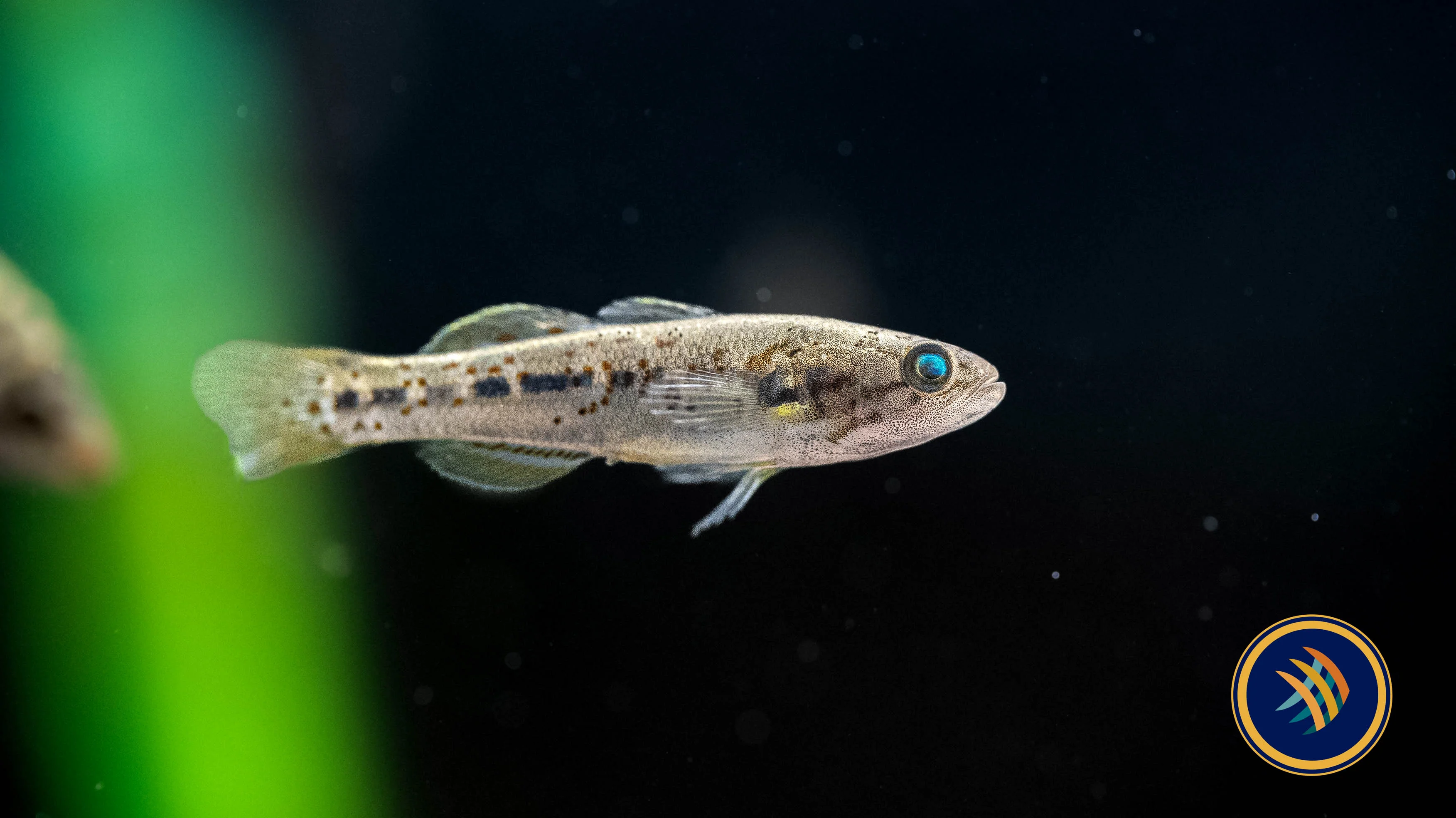
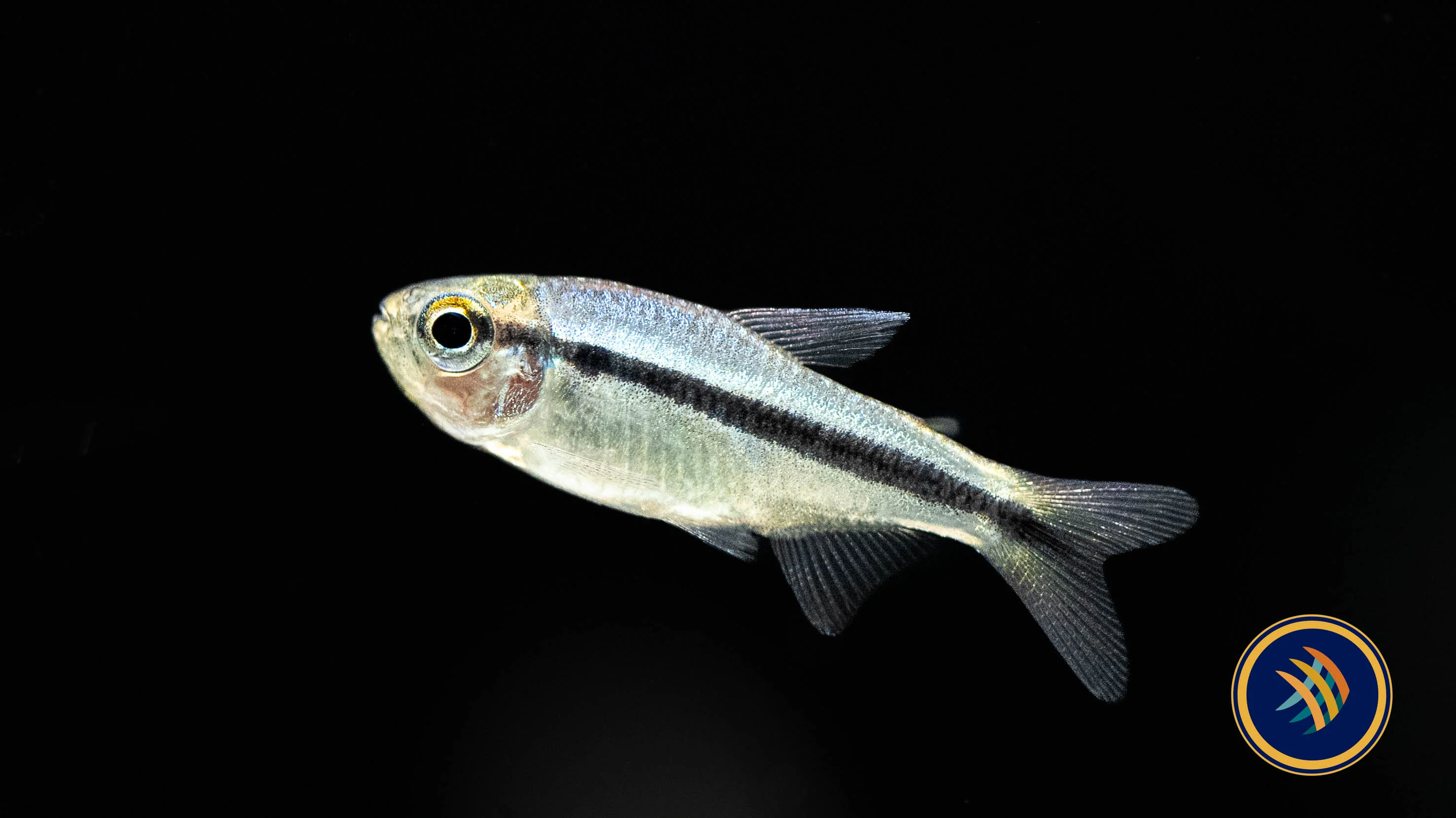
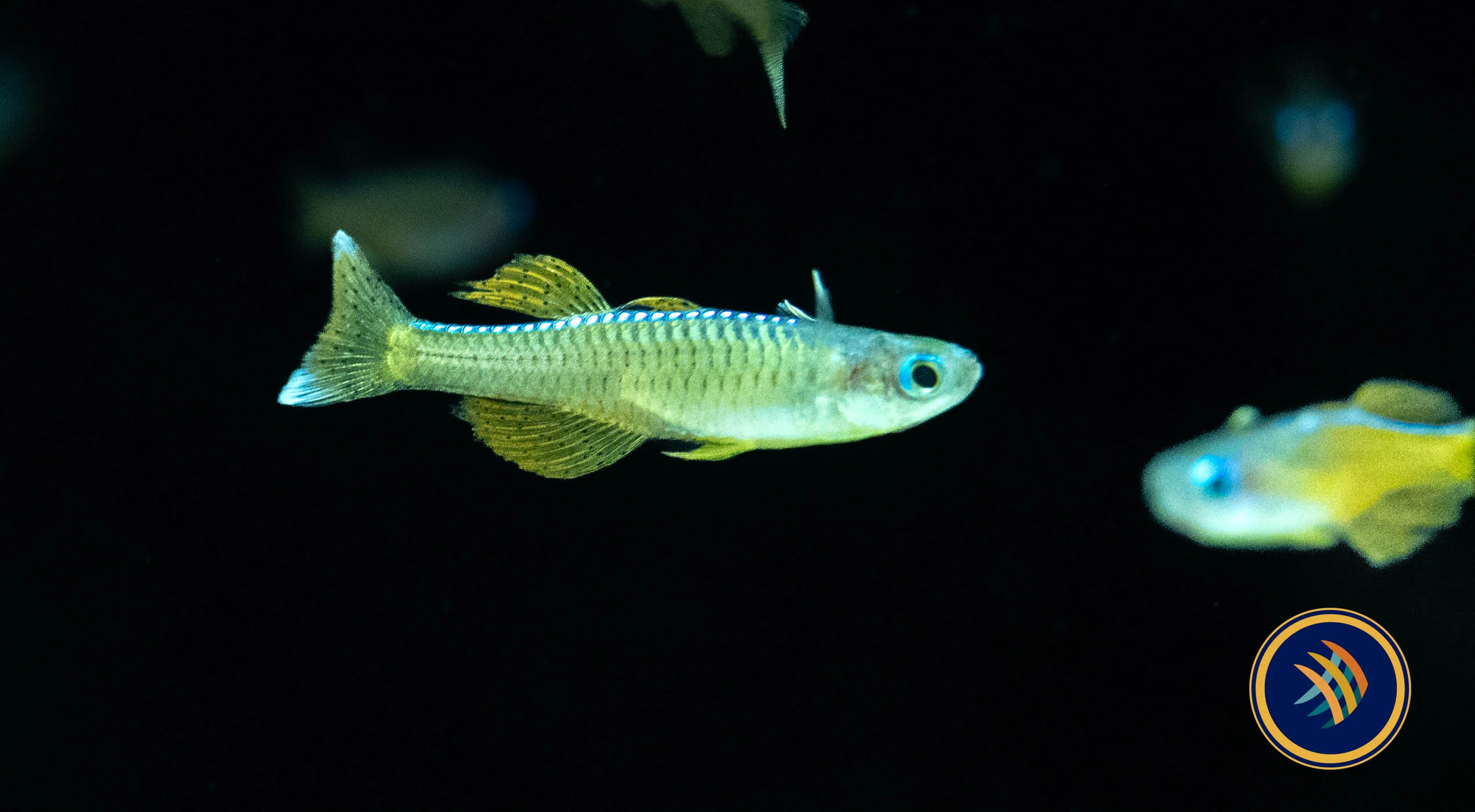
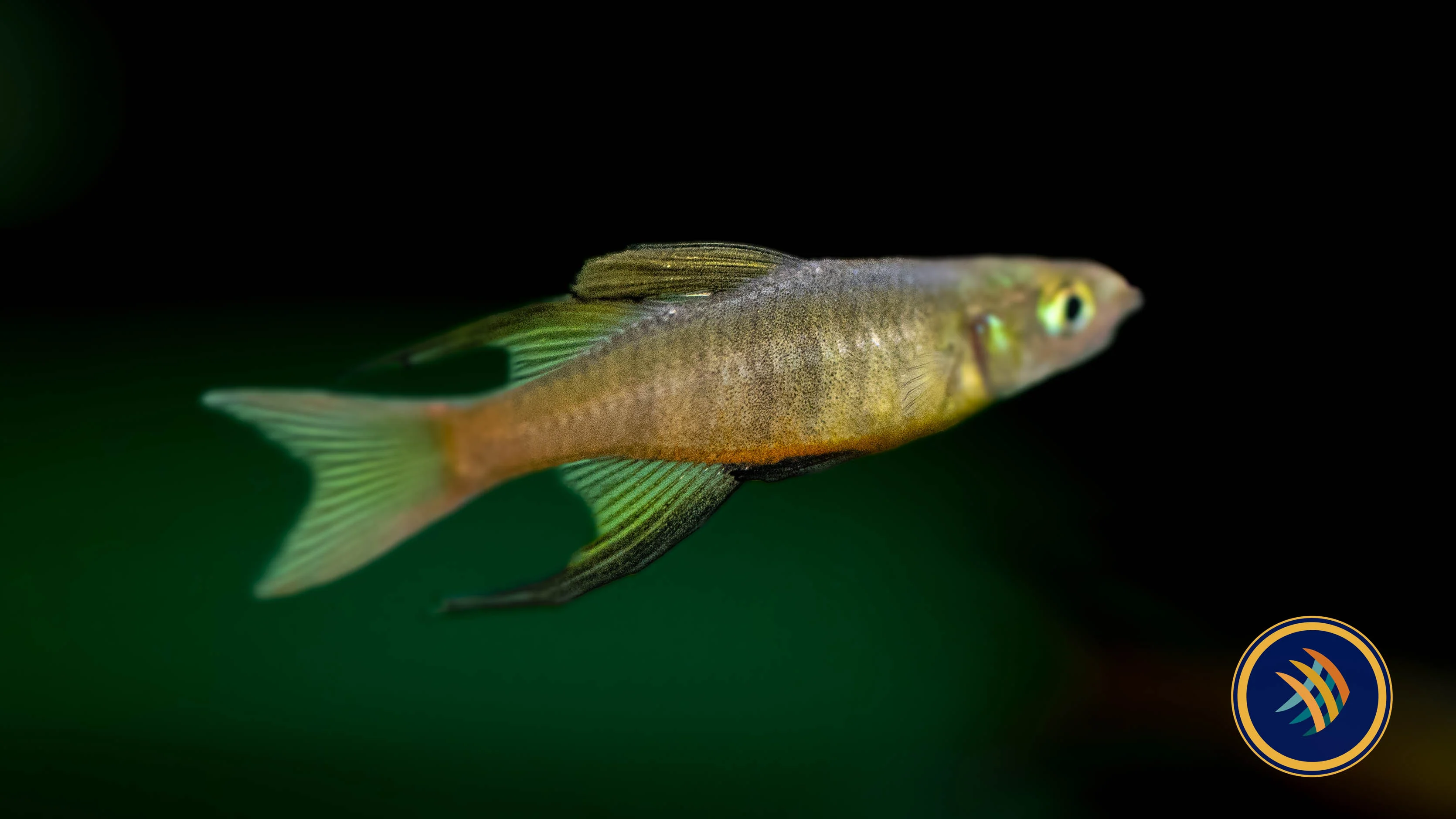
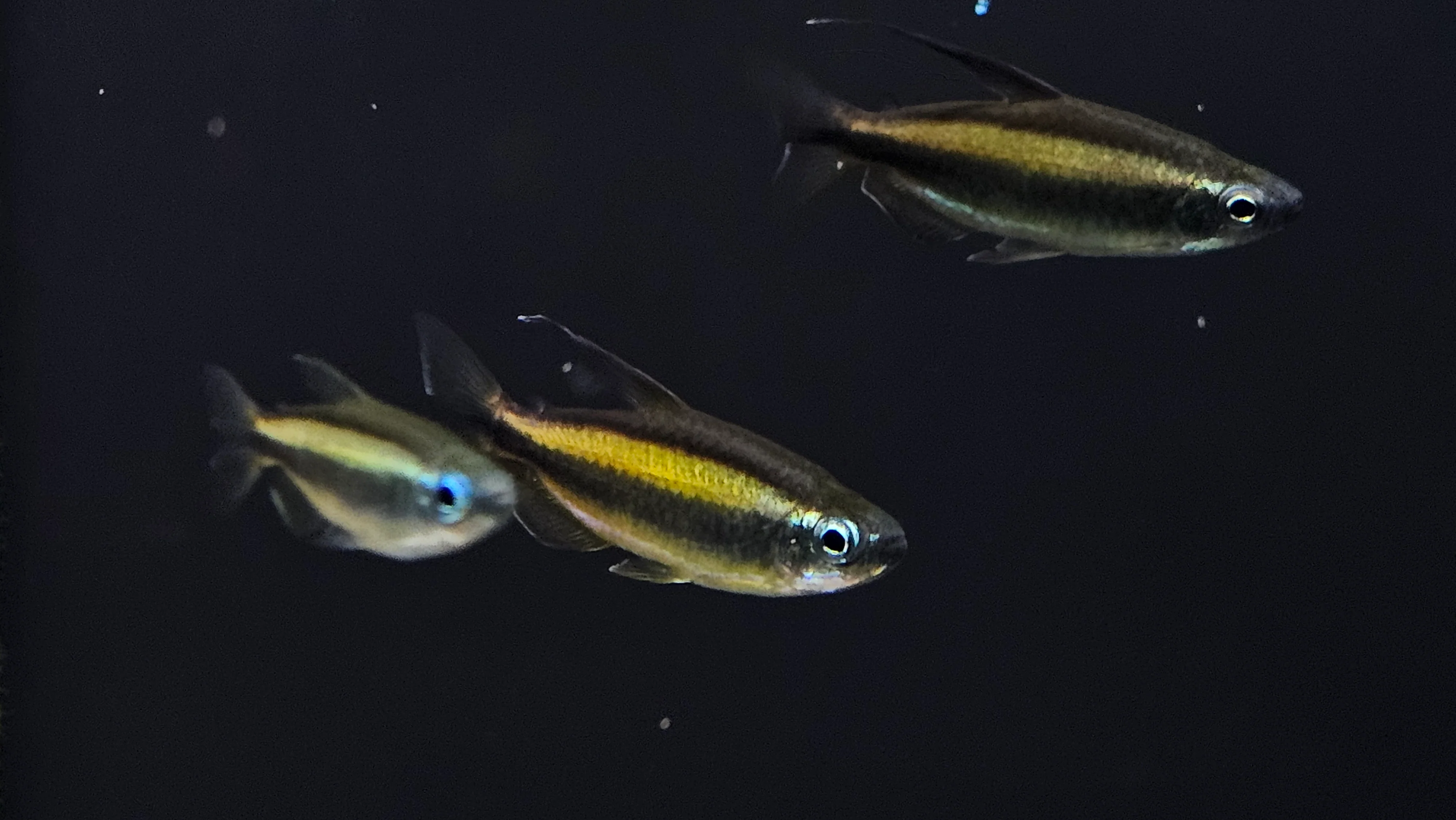
Blue Eye Congo Tetra (Phenacogrammus aurantiacus) is a stunning and rare freshwater species native to the Congo River Basin in Central Africa. Known for its shimmering body and vivid blue eyes, this fish is a prized addition to well-maintained aquariums.
Description
- Appearance: Slender body with dark brown to black coloration, adorned with bright blue spots and a horizontal stripe that can range from yellow to orange or green. Below this stripe is a pale blue band with iridescent reflections
- Eyes: Striking bright blue, giving the fish its name
- Size: Typically grows to 7–10 cm (2.7–4 inches), with males being larger and more vividly colored
-
Sexual Dimorphism:
- Males: Larger, more colorful, with elongated dorsal and caudal fins.
- Females: Smaller, rounder, and less vibrant
Tank Setup
- Tank Size: Minimum 30 gallons for a small school; ideally 70+ liters for breeding
- Group Size: Best kept in schools of 6–8 or more to reduce stress and encourage natural behavior
-
Aquascape:
- Planted tank with driftwood, leaf litter, and floating vegetation.
- Subdued lighting to mimic their natural habitat
-
Water Parameters:
- Temperature: 72–82°F (22–28°C)
- pH: 6.0–7.5
- GH: 3–18
- Flow: Gentle but steady current
Diet
- Type: Omnivorous
- In Nature: Feeds on worms, insects, crustaceans, algae, and detritus
-
In Aquarium:
- High-quality flakes and granules
- Live/frozen foods: brine shrimp, daphnia, bloodworms
- Feed small portions multiple times daily
Breeding
- Spawning Type: Open water substrate egg scatterers
-
Setup:
- Separate breeding tank with mesh substrate to protect eggs
- Dense vegetation and reduced lighting
- Eggs: 100–200 per spawn; hatch in 5–7 days
-
Fry Care:
- Initial feeding: infusoria
- Later: baby brine shrimp, microworms
- Remove fungused eggs during incubation
Temperament & Tankmates
- Behavior: Peaceful and shy; ideal for community tanks
-
Tankmates:
- Other characins, rainbowfish, corydoras, dwarf cichlids
- Avoid aggressive or much larger species
Blue Eye Congo Tetra (Phenacogrammus aurantiacus) is a stunning and rare freshwater species native to the Congo River Basin in Central Africa. Known for its shimmering body and vivid blue eyes, this fish is a prized addition to well-maintained aquariums.
Description
- Appearance: Slender body with dark brown to black coloration, adorned with bright blue spots and a horizontal stripe that can range from yellow to orange or green. Below this stripe is a pale blue band with iridescent reflections
- Eyes: Striking bright blue, giving the fish its name
- Size: Typically grows to 7–10 cm (2.7–4 inches), with males being larger and more vividly colored
-
Sexual Dimorphism:
- Males: Larger, more colorful, with elongated dorsal and caudal fins.
- Females: Smaller, rounder, and less vibrant
Tank Setup
- Tank Size: Minimum 30 gallons for a small school; ideally 70+ liters for breeding
- Group Size: Best kept in schools of 6–8 or more to reduce stress and encourage natural behavior
-
Aquascape:
- Planted tank with driftwood, leaf litter, and floating vegetation.
- Subdued lighting to mimic their natural habitat
-
Water Parameters:
- Temperature: 72–82°F (22–28°C)
- pH: 6.0–7.5
- GH: 3–18
- Flow: Gentle but steady current
Diet
- Type: Omnivorous
- In Nature: Feeds on worms, insects, crustaceans, algae, and detritus
-
In Aquarium:
- High-quality flakes and granules
- Live/frozen foods: brine shrimp, daphnia, bloodworms
- Feed small portions multiple times daily
Breeding
- Spawning Type: Open water substrate egg scatterers
-
Setup:
- Separate breeding tank with mesh substrate to protect eggs
- Dense vegetation and reduced lighting
- Eggs: 100–200 per spawn; hatch in 5–7 days
-
Fry Care:
- Initial feeding: infusoria
- Later: baby brine shrimp, microworms
- Remove fungused eggs during incubation
Temperament & Tankmates
- Behavior: Peaceful and shy; ideal for community tanks
-
Tankmates:
- Other characins, rainbowfish, corydoras, dwarf cichlids
- Avoid aggressive or much larger species
Original: $63.58
-65%$63.58
$22.25Description
Blue Eye Congo Tetra (Phenacogrammus aurantiacus) is a stunning and rare freshwater species native to the Congo River Basin in Central Africa. Known for its shimmering body and vivid blue eyes, this fish is a prized addition to well-maintained aquariums.
Description
- Appearance: Slender body with dark brown to black coloration, adorned with bright blue spots and a horizontal stripe that can range from yellow to orange or green. Below this stripe is a pale blue band with iridescent reflections
- Eyes: Striking bright blue, giving the fish its name
- Size: Typically grows to 7–10 cm (2.7–4 inches), with males being larger and more vividly colored
-
Sexual Dimorphism:
- Males: Larger, more colorful, with elongated dorsal and caudal fins.
- Females: Smaller, rounder, and less vibrant
Tank Setup
- Tank Size: Minimum 30 gallons for a small school; ideally 70+ liters for breeding
- Group Size: Best kept in schools of 6–8 or more to reduce stress and encourage natural behavior
-
Aquascape:
- Planted tank with driftwood, leaf litter, and floating vegetation.
- Subdued lighting to mimic their natural habitat
-
Water Parameters:
- Temperature: 72–82°F (22–28°C)
- pH: 6.0–7.5
- GH: 3–18
- Flow: Gentle but steady current
Diet
- Type: Omnivorous
- In Nature: Feeds on worms, insects, crustaceans, algae, and detritus
-
In Aquarium:
- High-quality flakes and granules
- Live/frozen foods: brine shrimp, daphnia, bloodworms
- Feed small portions multiple times daily
Breeding
- Spawning Type: Open water substrate egg scatterers
-
Setup:
- Separate breeding tank with mesh substrate to protect eggs
- Dense vegetation and reduced lighting
- Eggs: 100–200 per spawn; hatch in 5–7 days
-
Fry Care:
- Initial feeding: infusoria
- Later: baby brine shrimp, microworms
- Remove fungused eggs during incubation
Temperament & Tankmates
- Behavior: Peaceful and shy; ideal for community tanks
-
Tankmates:
- Other characins, rainbowfish, corydoras, dwarf cichlids
- Avoid aggressive or much larger species